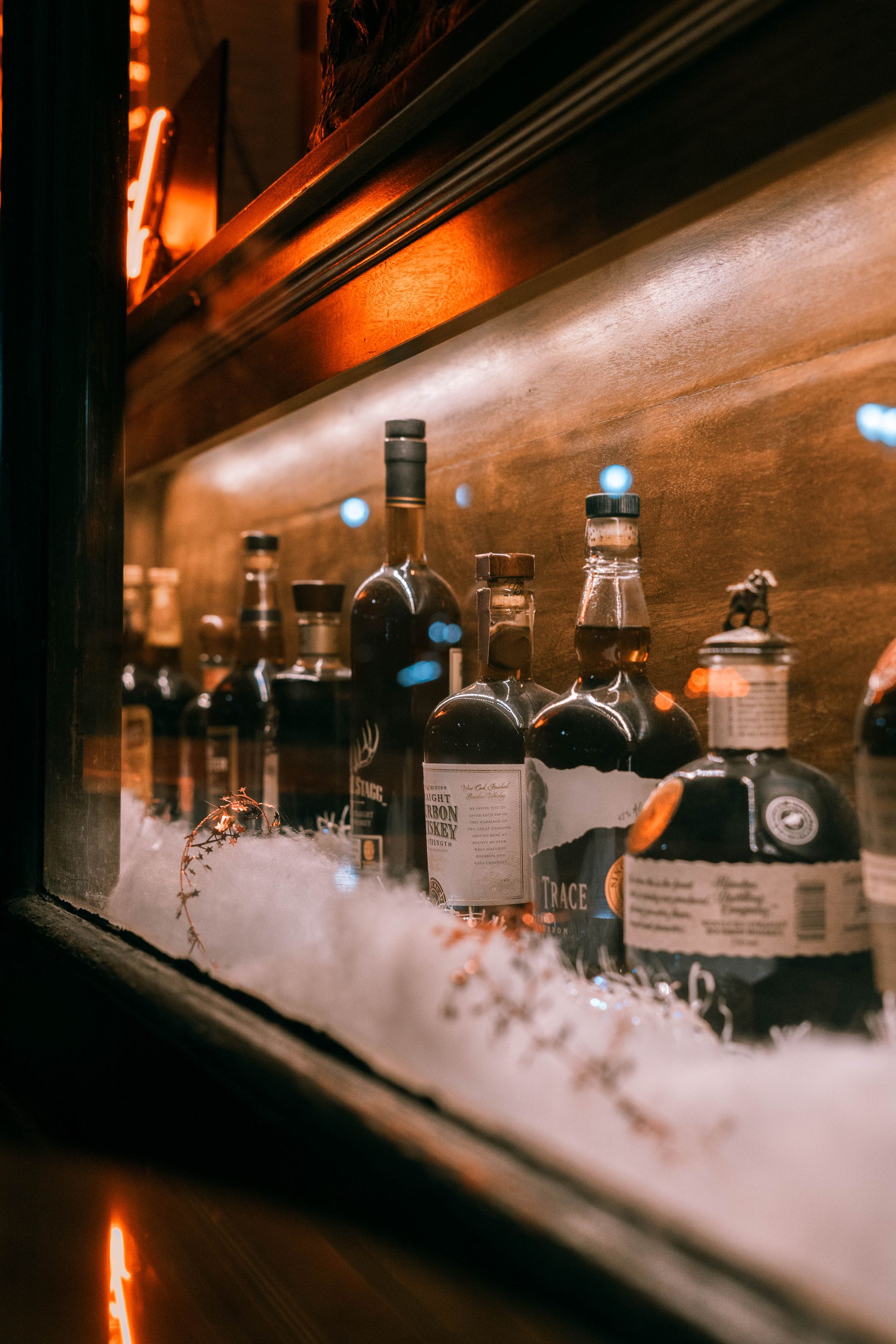
Every fall, the same ritual unfolds. Buffalo Trace announces the annual release of Pappy Van Winkle — a few thousand bottles across three expressions, distributed to a nation of millions of bourbon enthusiasts. Retail price for a bottle of Pappy 23: roughly $300. Secondary market price: $3,500–$4,500. A 12x markup. For whiskey.
On October 9, 2026, Sotheby’s held its first live auction at The Macallan Estate in Speyside, Scotland. The headline lot — a bottle of The Macallan Fine & Rare 1926 — sold for £2,125,000. At the prevailing exchange rate, that was $2,807,975: the most valuable bottle of whisky ever sold at auction in U.S. dollars. Sotheby’s auctioneer Jonny Fowle brought down the hammer on a century-old vintage, in the distillery where it was born, to mark exactly 100 years since the cask was filled.
It was a spectacular result. It was also, in the context of the 2026 whisky market, a complicated one. Because the same year that produced a $2.8 million headline also produced the data that should make collectors think hardest about what comes next.
The Macallan 1926 comes from cask number 263, filled in 1926 and drawn in 1986 after 60 years of maturation. Just 40 bottles emerged. At most 14 received the Fine & Rare label; others carried labels by Sir Peter Blake and Valerio Adami — which is why bottles from this single cask have repeatedly set auction records. The October bottle carried a pre-sale estimate of £1.7 million to £2.2 million and sold at the low end of the range: a £1.7 million hammer, £2,125,000 with buyer’s premium.
Here is the nuance the headlines skipped. The October result was £62,500 below the £2,187,500 paid for the Adami-labelled bottle in 2023. It did not break the sterling record. It set the dollar record only because of the exchange rate. And as one careful analysis noted, the October sale set a record for the Fine & Rare version specifically — but a single auction cannot establish a broader recovery in the rare-whisky market. The white-glove sale was 100% sold, achieving £3.3 million against a £2.4–£3.2 million estimate, with 86% of lots beating their high estimates. Strong — but narrow, concentrated in Macallan, and driven by the centenary occasion.
If Scotch provided the 2026 glamour, American whiskey provided the more interesting market signal. In January, Sotheby’s New York hosted The Great American Whiskey Collection — 360 bottles from a single collector, across 320 lots. The total: $2.5 million, a record for the most valuable single-owner American whiskey collection ever sold. Nearly 90% of bottles beat their high estimates.
The centerpiece was an Old Rip Van Winkle 20 Year Old Single Barrel — “Sam’s,” distilled in 1982, one of only 60 in existence, signed by Julian Van Winkle III himself, bottle #54. It sold for $162,500, becoming the most expensive American whiskey ever sold at auction. The undercard told the deeper story: Old Rip Van Winkle “Blue Smoke” 18-Year-Old at $37,500. A Twisted Spoke 16-Year-Old at $32,500. A J.W. Gottlieb Private Stock Rye from 1984 at $56,250. An Old Rip Van Winkle Bottled in Bond from 1917 at $47,500.
As Sotheby’s whiskey specialist Zev Glesta put it, the sale was “a defining moment for American whiskey at auction,” pointing to the “continued maturation of the global market for the rarest American whiskeys.” The telling detail: these were not aristocratic estate bottles. They were store picks, family gifts, anniversary barrels, retailer exclusives — a bottle meant for a Chicago liquor store, a Manhattan shop pick that originally sold for $75. Forty years later, museum pieces.
The third leg of the 2026 market was Japanese whisky, and it told a different story — one of continued, almost defiant strength. At Sotheby’s September whisky sale in New York, a bottle of Karuizawa 1970 Cask #6017, dubbed “The Last Masterpiece,” sold for $68,750. The sale contributed $2.9 million and sold every one of its 500-plus bottles — the highest-grossing spirits auction Sotheby’s had ever held in New York, and the highest number of registrants for any spirits sale globally.
Karuizawa is the fascinating case. The distillery closed in 2000. Supply is fixed and shrinking — every bottle opened is one fewer in existence. That terminal scarcity creates a price dynamic unlike anything in Scotch, where distilleries still operate, or bourbon, where new expressions keep emerging. The Japanese market is not pricing whiskey. It is pricing extinction.
Record prices make headlines. They do not make a market. The rare-whisky indices that track the broader market — the bottles that actually trade in volume, the £500-to-£5,000 range where collectors live — tell a more sober story. After the 2021–2022 peak, when stimulus money and lockdown boredom inflated everything collectible, the middle of the whisky market corrected. Some bottles are down 20 to 30% from their highs. The auction houses highlight the records; they do not publish the lots that failed to meet reserve.
There is also the question of who is buying. The Macallan Estate sale drew from private collections worldwide, and the buyer pool for a $2.8 million bottle is perhaps two dozen people globally. That is not a market — it is a club. The health of whiskey as an asset class depends on the thousands of collectors buying at $500 to $5,000, not the handful bidding at seven figures. On that measure, 2026 was a year of stabilization, not triumph.
And the American whiskey boom has a structural vulnerability: supply is not actually constrained. Unlike Karuizawa, American distilleries are still operating, still releasing limited editions, still creating new “rare” bottles every year. The Van Winkle mania depends on Buffalo Trace’s allocation discipline holding — a corporate decision, reversible at any time. Collectors pricing 2026 allocations as if they were 1926 Macallans are making a category error.
The 2026 auction results support three conclusions. First, the absolute top of the market — the trophy bottles with perfect provenance — remains extraordinarily strong. Wealth at that level is insensitive to market cycles. Second, American whiskey has arrived as a legitimate auction category, with depth beyond the headline lots. Third, and most important for collectors: the records tell you about the top 0.1% of bottles. Your collection lives in the other 99.9%, where the market is flatter, more rational, and more honest.
The smart money in 2026 was not chasing the $2.8 million Macallan. It was watching the $68,750 Karuizawa — the bottle from the dead distillery, the truly finite supply, the asset with no future issuance to dilute it. Scarcity is the only fundamental in collectibles. Everything else is marketing.
“Today’s result reflects the enduring fascination that The Macallan 1926 inspires among collectors around the world,” said Jonny Fowle, Sotheby’s global head of whisky and spirits. “More than a century after it was distilled, it continues to stand alone as the benchmark for rarity, provenance and desirability in whisky.” Benchmarks are useful. Just remember what they measure — and what they don’t.
The definitive source for whiskey valuation intelligence is still up for grabs. WhiskeyValues.com is available for acquisition by the company that will own this category — inquiries to info@primedomaincapital.com.
Fixed price. Clean transfer through Escrow.com. Confidential inquiry.
Macallan, Pappy, Yamazaki, and Karuizawa keep climbing — but the 2021–22 boom left a correction zone. Auction data on what rare whiskey is actually worth in 2026.
Read →
Bottles offer liquidity and enjoyment; casks offer higher ceilings and the angel’s share. The honest comparison of returns, risks, costs — and the scam red flags.
Read →